

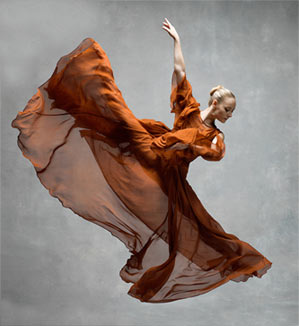
On rereading 'Meditation 101' I first mused on the limitation of a series... -O2, -O3, ad infinitum, being an unbalanced presentation of meditation as a kind of progressive paint-by-numbers course. We are certainly subject to various natural laws (programs) but we are not robots (yet) and our relationship with the world is organic. Our primary interface is the six senses, processed by the brain? All in all a bit of an arbitrary even chaotic process. A key redeeming quality is the faculty of memory in that we can observe, record and recollect; we can learn – often through a succession of mistakes – with the general direction hopefully toward increasingly useful and effective strategies with less suffering. This can be broadly thought of as sati. Meditation is (initially) a honing of this quality of conscious-awareness with an inclusive, reflective tone. The process of training our body and mind in calm, stillness and stability is like a dancer doing yoga, gym work, music, etc. to train. The actual dance, the performance, is a graceful synthesis of physicality, choreography and intuition. True art is authentic, not just a parroting of prescribed moves – paint all #7 blocks green; #12 orange... In a conventional world we need agreed procedures, interactive forms... "good morning, a drink?, nice jacket... etc." And the conversation can continue in a stilted, rigid format or it can progress to become honest and original – 'real'. How is the conversation you have with yourself?
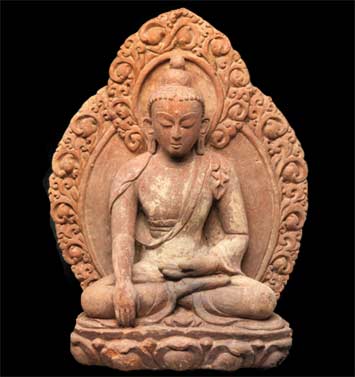
Transformation is the gradual, ongoing investigation and negotiation with the conditions we are amidst. It is easiest to begin with the external... diet, environment, employment, relationships and the like. The arrangement of these sets the stage, creates the ambience for the dance, prepares the canvas for the painting. All true artists have done the grunt work, studied the work of masters, trained, experimented... and failed many times. Some have a gifted propensity but... we all begin from where we are with what we have. The Buddha was a human being – you are a human being – he can/could do it – you can/will do it. How long might it take? Assuming a good amount of foundation work has been done (study, transformation, practice, etc.) then qualities like patience, intuition, trust, relaxation, non-expectation, receptivity, etc., are both cultivated and allowed to naturally arise. They collectively create an arena for insight, they will fashion an enticing invitation to the Nine Greek Goddesses, the Muses. Insight is the solvent of ignorance, dissolving our misunderstanding, our delusions, our bigotry, in the clear light of dhamma.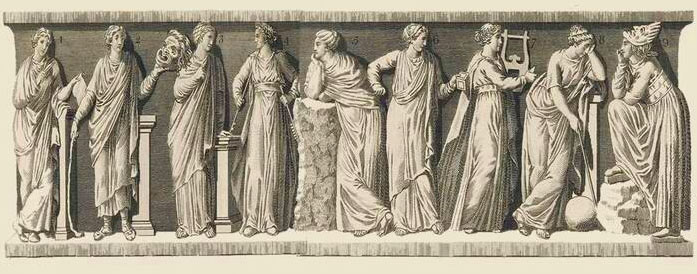
This silent, receptive, still state cannot be created, cannot be forced. Meditation practice, ultimately, is not acquisitive it is reductive. It is the actuation of the paradox 'less is more'. We set the stage and trust that our grounding in virtue, our abandoning of all ego-intention, all control-desires is truly safe – and functionally operative. Without expectation, without intervention, what is – is simply what is. Awareness might register 'oh, there is a thought' but if it is not possessed or identified with then it simply is what it is; it has arisen, it will cease. It is not right nor is it wrong, it simply is. The Bahiya sutta expresses this well...
When Bahiya, for you in the seen is merely what is seen; in the heard will be merely what is heard; in the sensed will be merely what is sensed; in the cognised will be merely what is cognised, then Bahiya you will not be 'with that'. When Bahiya you are not 'with that', then Bahiya you will not be 'in that'. When, Bahiya, you are not 'in that', then Bahiya you will be neither here nor beyond nor in between the two. Just this is the end of suffering.
 The practice of listening (with the ear) is a fairly easy, accessible way to tune into this open non-self-created experience. We cannot create the sound of the rain but we can receive it. We can open to... whatever sound arises, what sound there simply is. Visually (with the eye) focus on the empty space a metre in front of you. There is no-thing there but there is visual consciousness, awareness of seeing. Give some time to abiding in experiencing, being, no-thing. Your focus might drift and notice an object. Simply allow it to be no-thing, non-relative – receive 'all that there is' simply as it is. That's the theory. As we develop we can experiment with increasingly subtle modes of simple abiding. When our interactions with the world initiate from this point of still clarity 'the dance' is truly elegant.
In 101 I emphasised, in a conventional context, being content with 'relatively' rather than demanding or expecting 'perfectly'. What is your perception of perfect? I find that such qualitative definitions are comparative; measuring this against that. If we can allow that this moment of experience, now, is all that there is, we can rest in the non-relational, abide in the isness or suchness of 'this'... a state of non-preference. In this context there is "no long or short, no small or large" – Kevaddha Sutta — Digha Nikaya 11
With consciousness that is signless, limitless, all-illuminating,
Then water, earth, fire, & wind find no footing,
Then long & short, small & large, pleasant & unpleasant –
Then 'name-&-form' are all brought to an end.
Ultimately there is no relative, no perfect. This present-moment cannot be other than how it is – right now – complete, indivisible. From this perspective we can say: 'this' is as good as it is possible to be – which is one dictionary definition of perfect. And this moment changes – transmutes into an iteration of itself. As a practice, incline your evaluations, your world view, to regard 'it all' as the cup half full – seeing all conditions as infinitely malleable. Consider that we are not in a deterministic universe. We are intelligent participants capable of cooperating with 'all that there is'. Our intentions and resultant actions are mind made and the clarity and spaciousness through which we move will determine the quality of subsequent moment-iterations.
"May I have the confidence to change what I can – the patience to bear with what I cannot – and the wisdom to know the difference." This is commonly known as the serenity prayer and is generally attributed to Reinhold Niebuhr in the 1930's.
Serenity...
Tranquillity.
Calm.
Peace.
Truth.
Wisdom.
Freedom.
If any of these words resonate then you have a seed. Nurture it as if your life depended on it.
It does.
Everything is changing. A simple statement of the obvious yet why is it such a key teaching of the Buddha? Change is a given and the conundrum we face is that we do want some aspects of our life to change... but we want others to remain unchanged; with the key word in both being 'wanting'. The untangling of this conundrum is two-fold. First, that we acknowledge our limited control over the 'things of this world' – our wanting. Second, that we ponder the possibility that we are essentially not 'a thing of this world'. That we can allow the possibility that there is an aspect of our being, perhaps an element of life as a whole, that is not subject to the laws of change.
Our days are a relentless flow of changes with many of them insisting that we go along, that we conform. Evolution demands adaptation and the price to pay for failing to keep up can ultimately mean death.
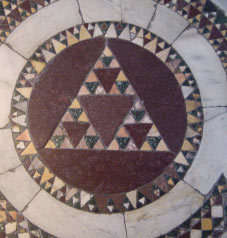
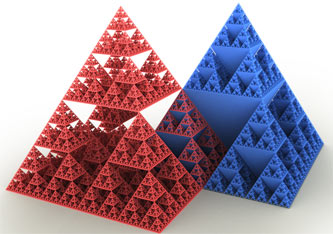
Various thoughts simultaneously came to mind for the title of this piece ranging from weird, weird and wonderful, bizarre, even creepy. The seed arose with Mister Sierpiński – and I wonder if you have heard of him? It was only by one of those weird, wonderful, bizarre convergences by which I came to make his acquaintance. You may have read the explanation of my triangle logo in the about page? A couple of years ago I came across this diagram and thought: "Well, that's pretty cool" – it's a fractal, but I didn't think much beyond that.

A few weeks ago I read a reference to the Sierpiński triangle and it piqued my interest so I followed the link. There are various methods of constructing the triangle but I like the 'chaos game' most of all as it reflects the inexplicable yet clearly mathematically repeatable amazingness of nature, of the world that we live in. Have a look at this video
I have a collection of items brought together with the thought of assembling them into something nice – pleasing and useful; and call it my life. We all have 'a bunch of stuff' in and around us with some of it intentionally acquired and other bits just seemingly random and incidental; some of it physical and some of it mental. We work with and configure the various elements as we move forward following the idea of having a comfortable life. Some of the choices and adjustments are conscious and some are just reactive or habitual. And so it goes.
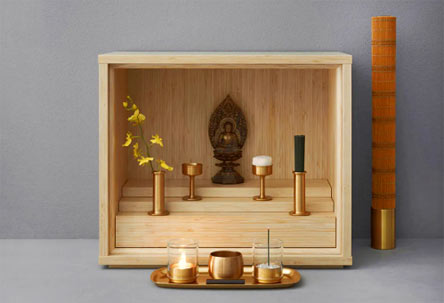
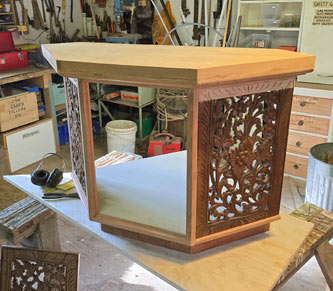
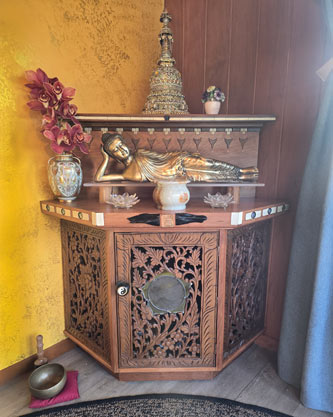
A specific set of items I have lined up are for building a shrine for my kuti. I renovated the building quite a number of years ago and gave a lot of time to design detail. The core restructuring came together quick enough but a few features took longer... years. The shrine is one of, the last of, those. Why has it taken so long? The convergence of the ideal and the real can be a protracted and sometimes frustrating process. Time, motivation, materials, a clear vision, health, wealth and weather... and the tally of waffling obstructions (as to why my life is not complete :) goes on – and on. As a Buddhist monk the 'why', the motivation, is fairly simple and perhaps I can share some of that.
And we are in it – yes?
But just what is this it that we are in?
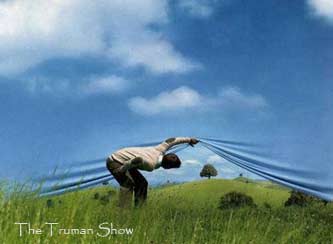
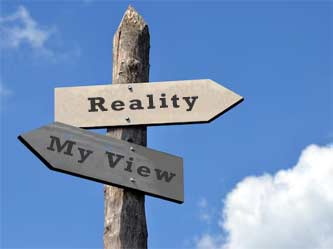
I start by considering two versions: subjective & objective. For an objective reality to exist we must: "allow 'that which exists' to be independent of any observer" – and so allow the classic philosophical question: "If a tree falls in the forest and no one is around to hear it, does it make a sound?" to be answered 'yes'. Science is a good go-to with its required predictability and we see that gravity (on earth) is 9.8 N/kg. It just is. Water boils at 100°C. Trees fall and go 'crash!'. This all works well enough but I tend to think more of an objective scaffolding, a lattice of solid-enough 'poles and planks' upon which we can all move about but which is only there so we can work on building the main structure. What we are building is – culture, relationship, memory, language, art – and, perhaps, reality itself? Is gravity true or just a current value to describe the current state? Scaffolding isn't sacred, it's pragmatic. If all conditions are changing perhaps light will wake up one morning and decide to go faster? Or maybe not 'decide' – but just change. Either way this leads me to thoughts on consciousness and the nature of a subjective reality.

The word 'subjective' implies a subject and that subject is surely me. Is my experience a valid apprehension of reality? Do I see (hear, taste, touch, smell, think) a precise version of my life – my experience? In brief I would say no. The instrument(s) of our perception and apperception are so influenced by and dependent on an incredibly wide array of variables that any conclusion I might make is dubious. In science much effort is made to isolate the item being observed but this is effectively impossible. Nature is what we study and it is a complex, inter-dependent, inter-related system which cannot be broken down into parts.