
Everything is changing. A simple statement of the obvious yet why is it such a key teaching of the Buddha? Change is a given and the conundrum we face is that we do want some aspects of our life to change... but we want others to remain unchanged; with the key word in both being 'wanting'. The untangling of this conundrum is two-fold. First, that we acknowledge our limited control over the 'things of this world' – our wanting. Second, that we ponder the possibility that we are essentially not 'a thing of this world'. That we can allow the possibility that there is an aspect of our being, perhaps an element of life as a whole, that is not subject to the laws of change.
Our days are a relentless flow of changes with many of them insisting that we go along, that we conform. Evolution demands adaptation and the price to pay for failing to keep up can ultimately mean death. In a normal life-context we might think in terms of the death of a career, the death of a marriage, financial death and such like. Amongst all this, what is most stressful is the unwanted change to (the death of) what we perceive as self. The expression "loss of face" conveys the dilemma very well. Of course bits of your face aren't literally lost but it is changing; and how strongly we identify with our bodies, with our work, our social status and our financial status – and so many other 'things of this world'. We generally take it for granted that our acquired and owned aggregation of 'things' is what defines us, designates who we are.
Let's go back to the earlier consideration that there is 'an aspect of our being that is not subject to the laws of change'. This is the Buddha's teaching of anatta which says: "you are not the body, you are not the mind". You are not your house, you are not your career, and so forth. The dilemma is that it does not go on to say: "you are 'x'". It deliberately does not do this because we are so prone to want to create 'x' as just another some-thing, an any-thing... and this is how a soul, a self, or God is created. If you can allow, perhaps more through intuition than intellect, the possibility that we are capable of realising or experiencing 'some such' which is not personal but universal, a quality which is ineffable, divine, sacred, eternal, that which is unchanging, unmoving — still.
An approach to that stillness can be fairly easily found through the body. Just stop. Stand down – sit down. The creation of me as 'x' is so often related to movement. I am an athlete and I 'prove' that by running. I am rich and can 'prove' that by waving lots of money about. Prolonged stillness is often equated with death, both in the physical and social sense. To truly experience your being, your essential 'self' – however you might define that... as universal, spiritual, conditioned or unconditioned – the investigation is best done in silence and in stillness.
Sit comfortably, eyes closed, take a deep breath in. Follow the volume of breath through the nose, down the throat, filling the lungs. Feel the diaphragm distending. Hold it for a while – visualising the oxygen, that vital life-force, permeating the body. There is still movement, and change happens whether you are aware of it or not. The breath is not personal. It happens when you are asleep, as you sit here giving attention to these words. There is some, but it is more realistic to say, that there is no control.
Each event eventually ends and stillness is the turning point, the pivot around which all of our existence revolves. If there were no still spaces it would all be an unintelligible blur. There is awareness of an in-breath, an awareness of temperature, an awareness of visual objects. The array of events is vast but the 'screen' on which it is seen or known is singular — and still. A lot of terms are used attempting to describe this singularity — mindfulness, awareness, clear seeing, suchness, consciousness, pure presence, simple witnessing, knowing, etc. — but the reality of reality, the truth of truth, defies definition, it just 'is' and we are capable of experiencing it, of understanding the ineffable nature of our being. Our relative stillness is the medium through which we move toward absolute stillness, toward resolution of the mystery.
Stillness is an art, not one that is a common part of culture or education, but it is something that you already know, even if only partially. Meditation practice is a way to make that knowledge more complete. The general principle is one of relative reduction. If you are walking fast make a conscious intention to walk slowly. Stand down – sit down – be still. If you are thinking fast make a conscious... intention... to... think... slowly. Or choose only two words to think, one on the in-breath one on the out-breath. Peace. Relax. This resting in still simplicity requires effort and discipline; it is going against the habits of a lifetime. See the other objects that arise – thoughts, emotions, sensations, etc. – simply as 'objects that arise' and then go back to the breath.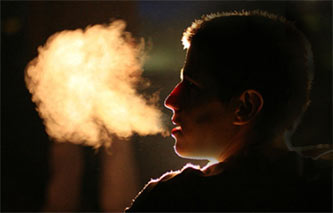
Again.
And again.
Train in this way.
This post is more about the 'what' rather than the 'how' in the hope that some of the suggestions and images presented might resonate and inspire you explore this very real, very personal possibility in more depth.
Here are a few canonical references that might clarify or extent your thoughts...
The Vitakkasaṇṭhāna Sutta — Majjhima Nikāya 20
The Discourse on the Removal of Distracting Thoughts
A very clear outline of five ways of dealing with thought. I earlier referenced IV but they all deal with the wayward mind.
Removing the Distraction by:
Item 5 generates some controversy, which I will bypass here, and simply suggest by example that if your mind is filled with hatred to the extent that you are likely to commit murder then crush the thought, not the person.
Kevaddha Sutta — Digha Nikaya 11
A very long sutta with a wide range of useful detail but it is the story at the end that I point to here... jump to "A Visit to the Devas" section. Where the Buddha responds...
"Instead of asking where the four great elements cease without remainder, you should have asked:
Where do earth, water, fire and air no footing find?
Where are long and short, small and great, fair and foul –
Where are 'name-and-form' brought to an end?"
And the answer is:
"With consciousness that is signless, limitless, all-illuminating,
Then water, earth, fire, & wind find no footing,
Then long & short, small & large, pleasant & unpleasant –
Then 'name-&-form' are all brought to an end.
With the cessation of viññāṇa [divided-knowing]
all this is brought to an end."
The 'things of this world' find no footing when there is nowhere for them to alight. In construction a footing is the base and the widest part of the building foundation. When there is no footing the assembly can not arise. The elements move around but no house is built. I am not this house...
Dhammapada 154
House-builder, you are seen!
You will not build again!
The rafters are broken,
The ridgepole destroyed;
The mind, gone to the Unconstructed,
Has reached the end of craving!
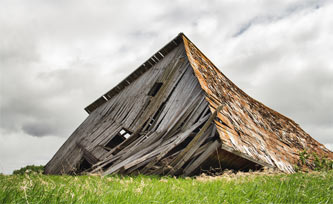
The 'House-builder' is classically Mara – the deluder, tempter, deceiver, death, etc. – and I regard him as manifestation(s) of the mind. Rafters = defilements, ridgepole = ignorance. 'Gone to the Unconstructed' = in this context I think of stillness but it can also be nibbāna, non-attachment, the unconditioned, the deathless, and many more words — that are not it.